Patrick Curran (2nd April,1865 – 10th November, 1954) is my paternal great grandfather, being the father of my grandfather, Herbert Curran.
Patrick was born in Ballagh, near Mullingar, Ireland. His parents were Michael Curran (1836-1881) and Annie Doyle (birth year unknown, died about 1881). Patrick went to school at Curraghmore.
Patrick immigrated to Australia about the age of 18, in 1883 after his father (Michael) was stabbed to death in Rathconnell, Ireland in 1881.
1888: Michael Cullinan (36 years old) and Betsy Wakefield (27 years old) moved to Kelleen Station (Pooncarie, NSW), one year after their marriage in Kapunda, South Australia.
Together with their first child, Michael, they arrived on a two horse driven cart. Michael had 1000 pounds to his name courtesy of his rabbiting period with Tom Wakefield who was Betsy’s brother.
Initially Michael and Betsy lived on the bank of the Darling River, in an area known as the Old Woodshed Billabong.
…a flood [in 1890] drove them out and they lived in tents on the bank of the deep creek near where the bridge over the creek is today. They lived there till the floods went down, then [Michael] built a 2 roomed house out of pine logs and a bark roof, where Kelleen is today…
… It had a iron roof just over the bark which made it cooler in summer.
There was 6 blocks shown on Para station at one time, 10 000 acres [each] and he got one. There was no improvements or fences so he had to put up a boundary fence.
Kelleen was 6 miles by 3 miles wide. He and his brother Jack put in 3000 acres cropping.”
(Phyllis Plant, letter)
According to Gordon Curran (Curran, D, The Family History of James Cullinan 1816-1990), Michael called his property Killeen named after his birth place but it was registered as Kelleen.
Gordon Curran describes their two roomed house as having:
pine slab walls and bark room with gum saplings for purlins, fastened with wire from an old fence. This was later extended and covered with an iron roof. The floor was probably dirt to start with but later was of pit sawn gum.
Gordon Curran
They have sheep but the wool clip doesn’t pay enough. Michael and other homesteaders try to sell back their leases for 50 pounds each but they are rejected. He then plants 600 acres of grain crops using river boats for transport. Chaff was transported by camel trains to Cuthero and Moorara.
Michael installs a production line system in his chaff shed with a double bagger chaff cutter and grain mill, driven by a Marshall steam engine, which is later used to drive the shearing machines
Source: Gordon Curran in Curran, D, The Family History of James Cullinan 1816-1990.
A Marshall Steam Engine. Source: https://collection.maas.museum/object/46878
Michael and Betsy had seven children at Kelleen Station, Michael 1887, Florence 1889, Mary-Ann 1891, James 1893, Andrew 1896, Kelleen (my paternal grandmother) 1899, and Catherine 1901.
1900: Tom Wakefield (Betsy’s brother) comes to work for Michael as a station hand. He is granted a small piece of land called Corifin. It has no water available so Tom and his family live in a four room cottage at Kelleen. He works for Michael for four years (Source: Wakefield Family History).
On June 2, 1904 Betsy died. She was 43 years old. The previous year her seventh child, Catherine had drowned in the Darling River at Kelleen Station. She was 2 years old.
1905: Tom Wakefield sells Corifin to Michael Cullinan.
For further Information, see the Kelleen Station page.
1905 – 1907 Michael Cullinan continued to live at Kelleen Station, River Darling, Pooncarie, NSW, Australia after marrying Ellen Dhann in 1905 in Wentworth, NSW.
1907: Ellen Cullinan (nee Dhann) was reported missing after going for mail across the Darling River.
Source: The Age, 14 May, 1907
1907: Ellen Dhann’s body was found in the Darling River. The Coroner found that there was “not sufficient evidence to show how she got into the water…”
Source: The Scrutineer and Berrima District Press, 18 May, 2007, p. 4Source: The Register, 23 May, 2007, p.7
Herbert Curran is my paternal Grandfather (my dad Kevin Curran’s father). He was born on 10 July, 1896 at Netley Station, Menindee.
First Nations’ History of Menindee
Menindee is part of the ancestral lands of the Barkindji people, who lived here for over 65 000 years before the arrival of Europeans.
‘Menindee’ is said to derive from two Barkindji words, ‘minandichi’ (referring to the ephemeral lake in the north west of the town) and ‘milhthaka’ (yoke of an egg). The lakes in Menindee were called, ‘wontanella’ meaning ‘many waters’. Source: Wikipedia
Menindee was originally named, Perry (in 1861), a name that was unpopular with white locals and changed to Menindee in 1863. Source: Wikipedia
Frontier War conflicts occurred in this area – including during the expeditions of Major Thomas Mitchell in 1835. The Barkindji were also removed from their land and taken to the Menindee Aboriginal Mission. Source: James Tylor
Menindee was a base camp for the ill-fated Burke and Wills’ cross continent expedition from October 1860 to January 1861.
Herb’s Timeline
Herb married Kelleen Lillian Cullinan on 4 June 1919. He was 22 years old. Herb died on 1 November, 1972.
In the early 1920s there were only “a dozen or so houses” in Menindee, no roads and a surface leading to the punt on the river Darling. Source: Wikipedia
Here’s where Herbert’s dad, Patrick worked:
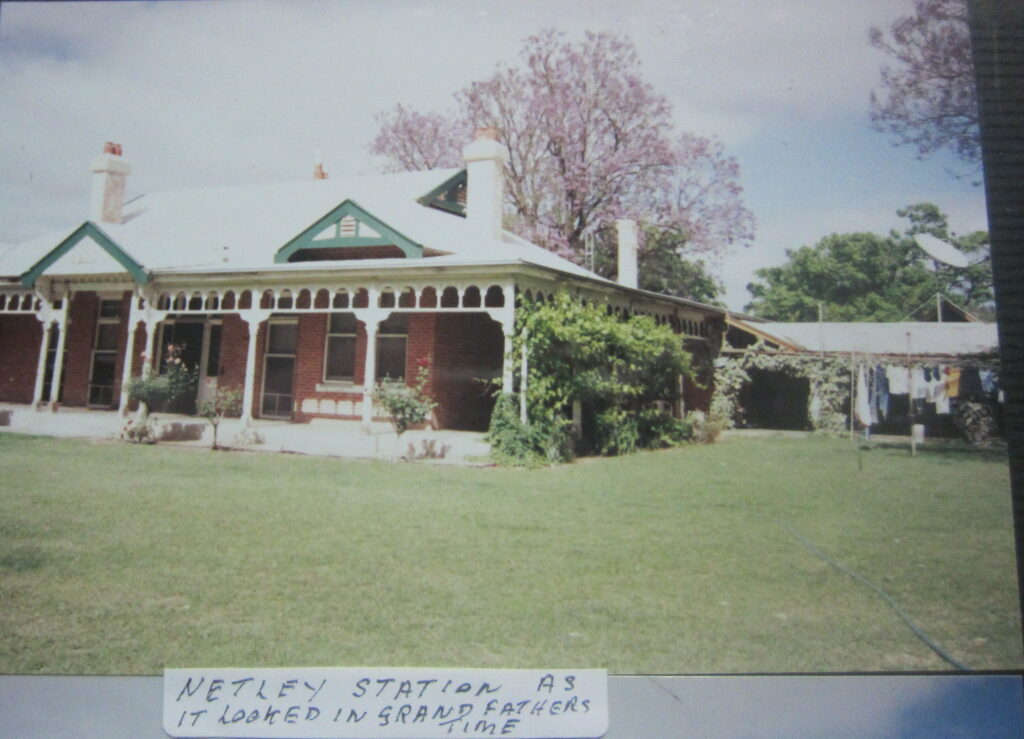
Netley Station (later named Bindara Station), Menindee, New South Wales
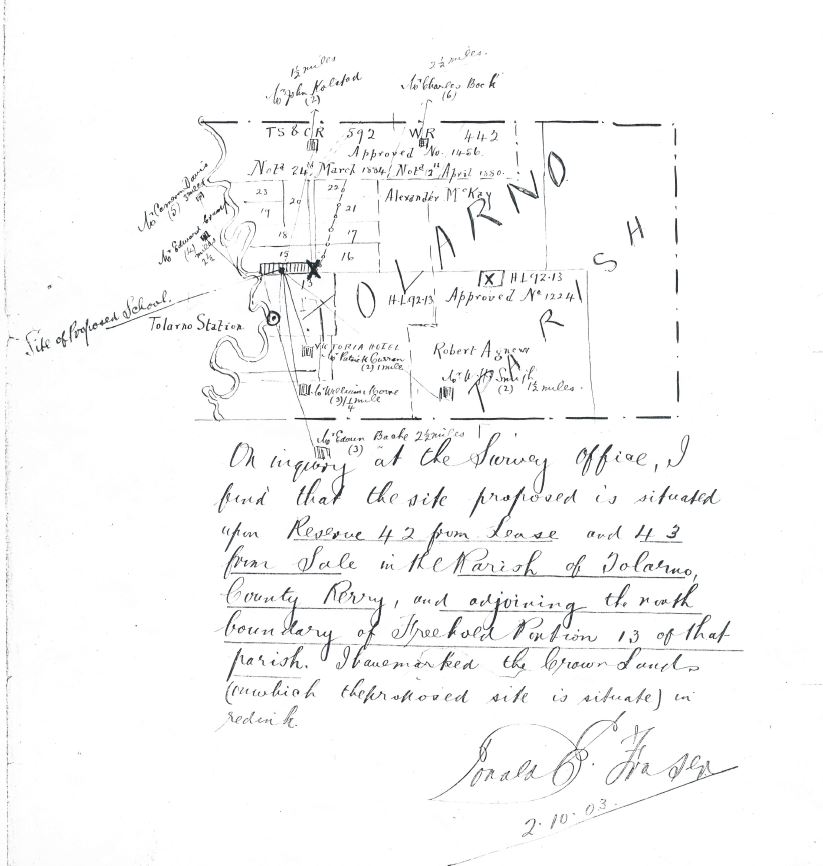
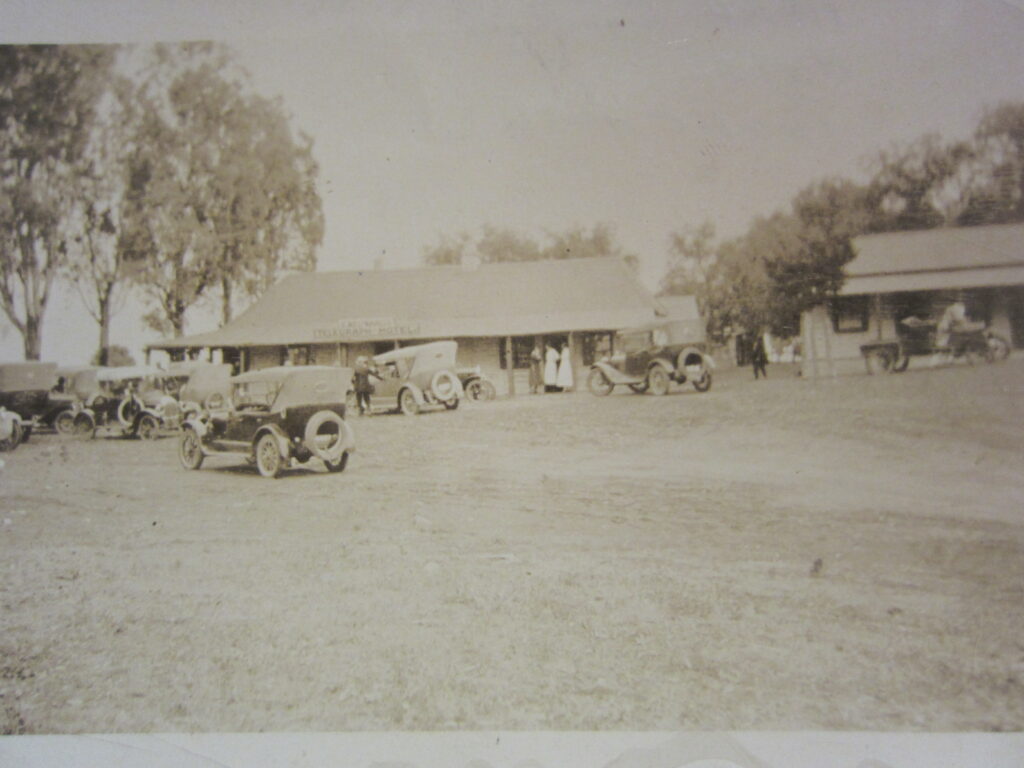
1900 Victoria Hotel, Tolarno.
Herb’s parents were licensees of the Victoria Hotel.
1904-1905 – Netley Station
Herbert’s father, Patrick works as a gardener at Netley Station.
1910 (7 December) – Mullingar Station, Pooncarie, New South Wales
Herb’s father, Patrick leases the homestead. He calls it Mullingar.
Herb assists in building their house and works on the property with his dad.
1918 – Fruit block, Curlwaa, New South Wales
Herb picks fruit with friends Ernie Page and Maurice Bath.
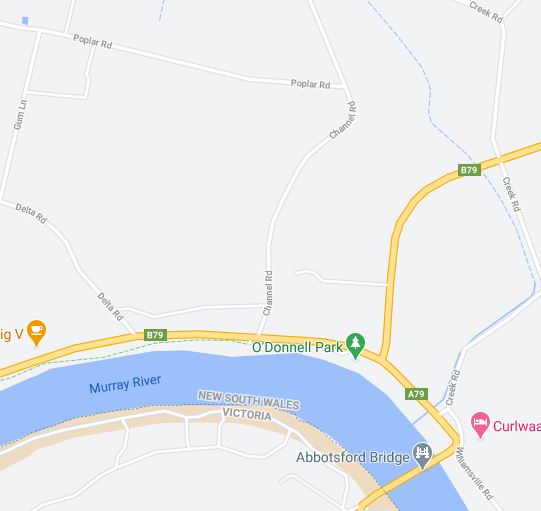
Herb buys a block of land, Lot 5, Sect 2 in Curlwaa, on the corner of Channel and Poplar road (see map below). He plants dried fruit and citrus.
Herb signs up to local footy club and attends Pooncarie races and ball where he meets his future wife.
1919 – Herb marries Kelleen Lillian Mary Cullinan in a dual wedding with his friend Ernie Page who married his sister, Annie at Mullingar homestead.
1920 – Herb lives with his wife (Kelleen Cullinan) at Mullingar Station, Pooncarie, New South Wales
Mallara Station
Herb goes wool pressing, which involves pressing wool into bales using one’s legs and feet.
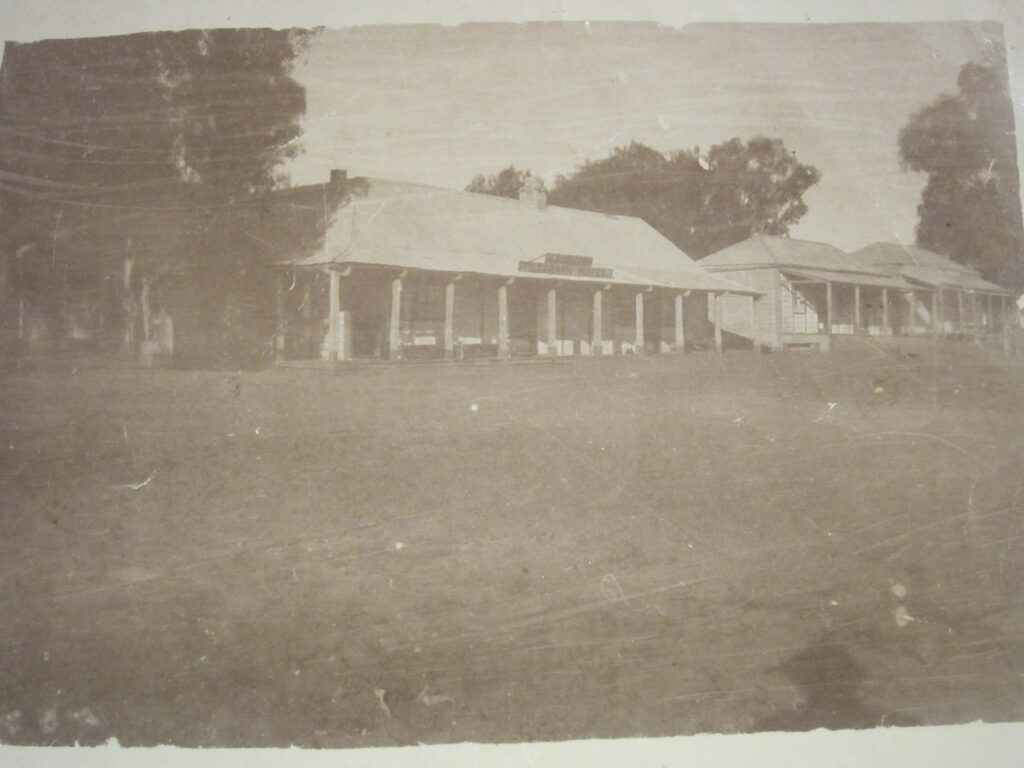
1921 – Telegraph Hotel, Pooncarie, New South Wales (on the corner of McKinley and Mallara streets, see photos below)
Herb becomes licensee of the hotel below, that no longer exists.
1922 – Benetook Avenue, Mildura, Victoria, Australia
Herb, Kelleen and their family move to this fruit block.
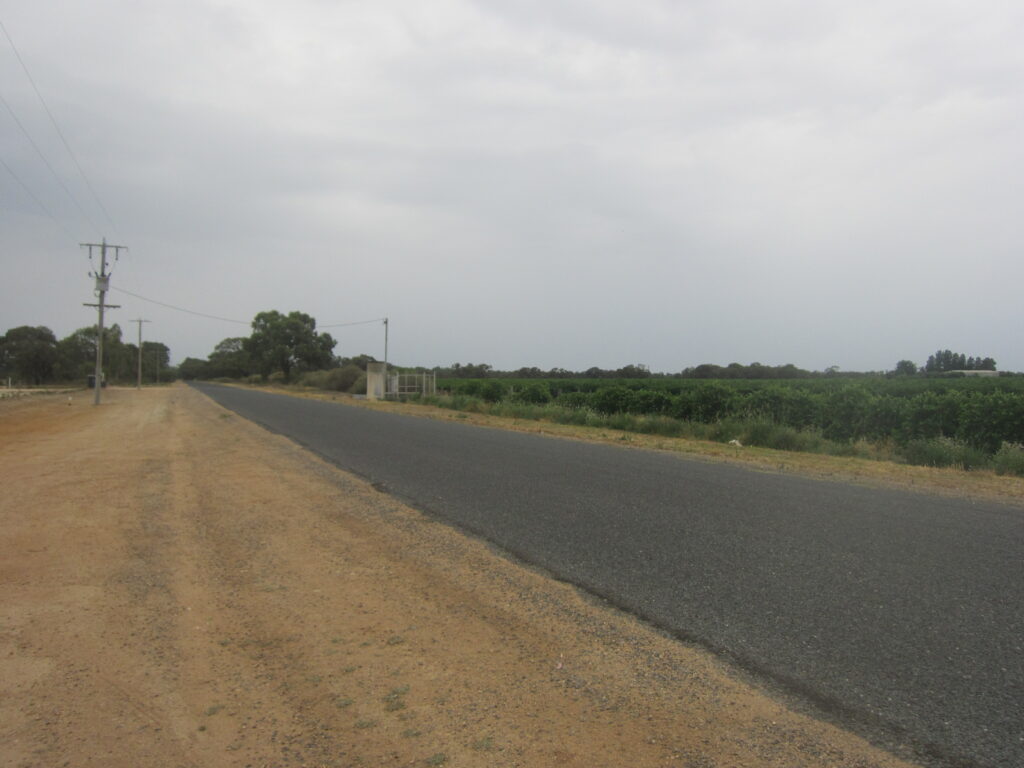
Benetook Property location (2012, Greg Curran)
1925 – Herb, Kelleen and their family move to Cowra Avenue, Mildura
Temporary accommodation for the family.
This was a mud brick or adobe house that collapsed in the Murray River floods in 1956.
Herb begins a new job carting meat from the slaughterhouse at Gol Gol to a shop in Mildura (for Jack Crozier, Butcher) and other shops in Irymple, Red Cliffs, Merbein, Coomealla and Wentworth.
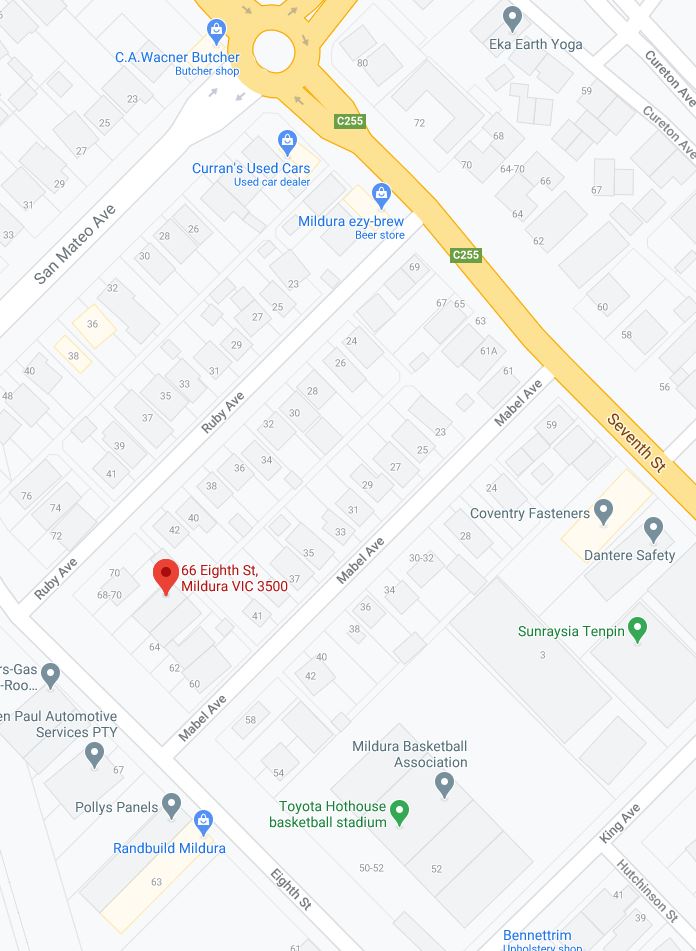
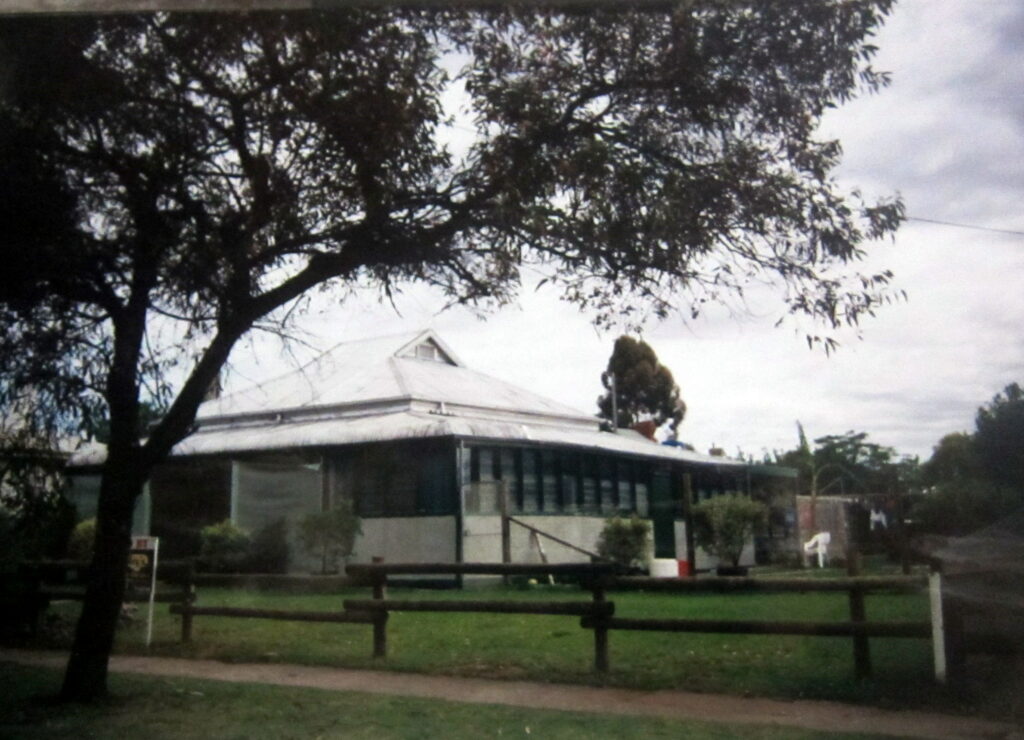
1926 – 66 Eighth Street, Mildura (see map below)
Herb buys a house and vacant block. He grows Gladioli and silver skin onions that he sells to the Chinese greengrocers.
1939 – 1972 Thirteenth Street, Mildura
Herb buys the property, the grape vines and the citrus plants.
He eventually sells his carting contract and works on the block for the rest of his life.
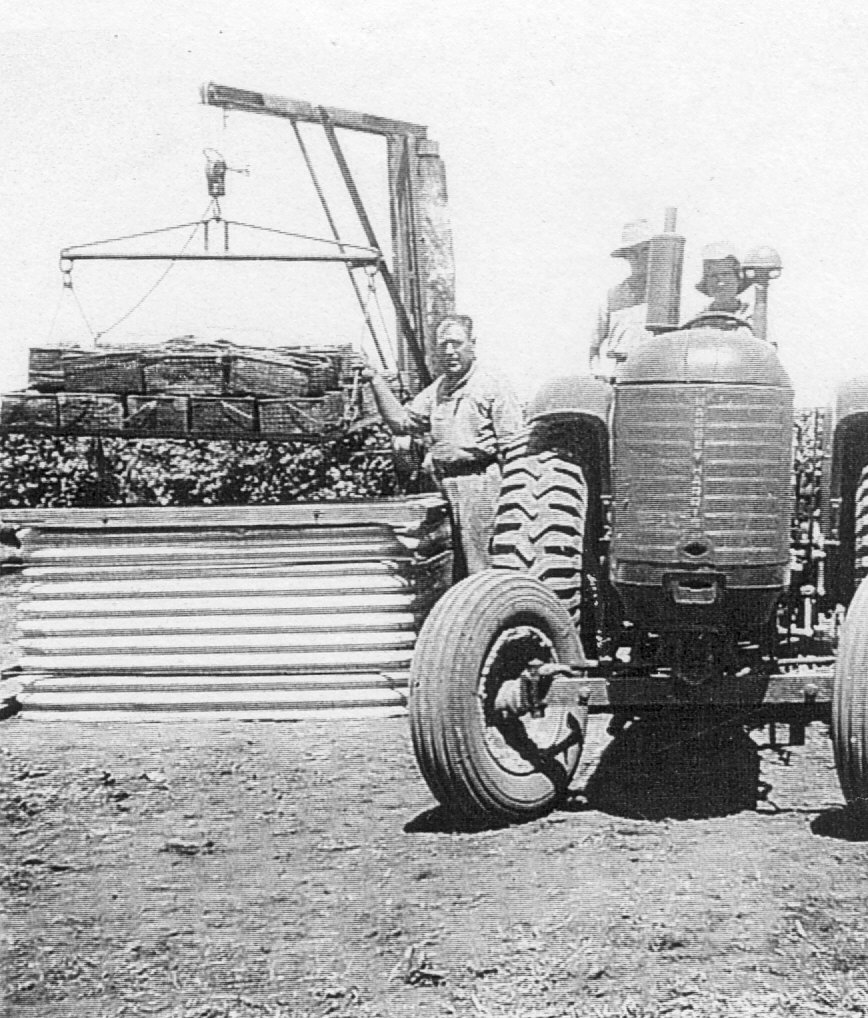
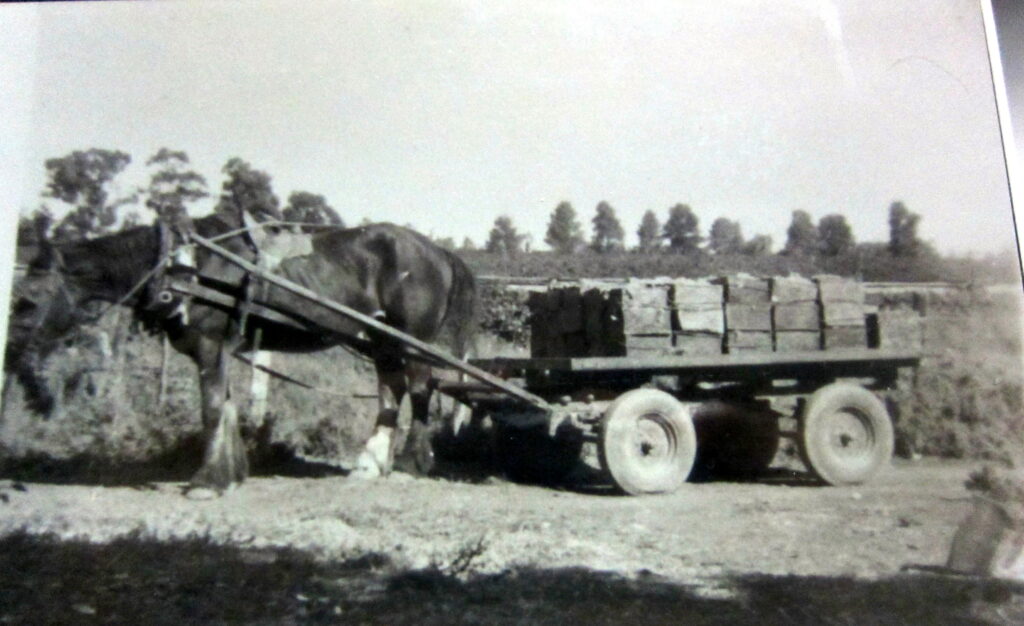
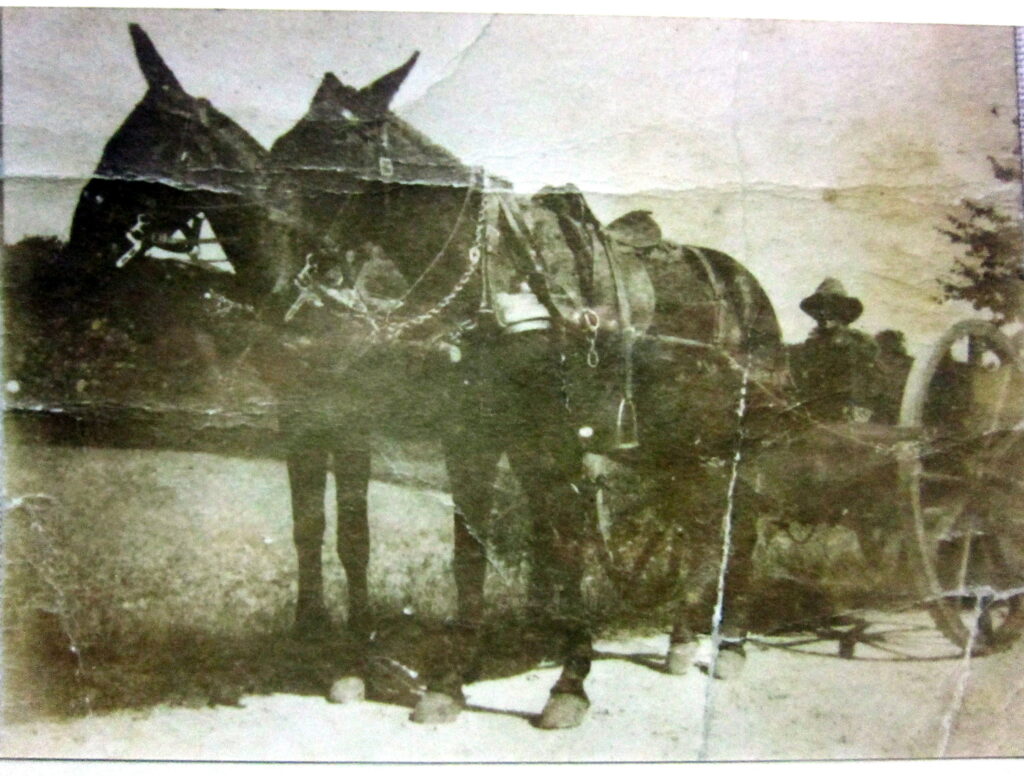
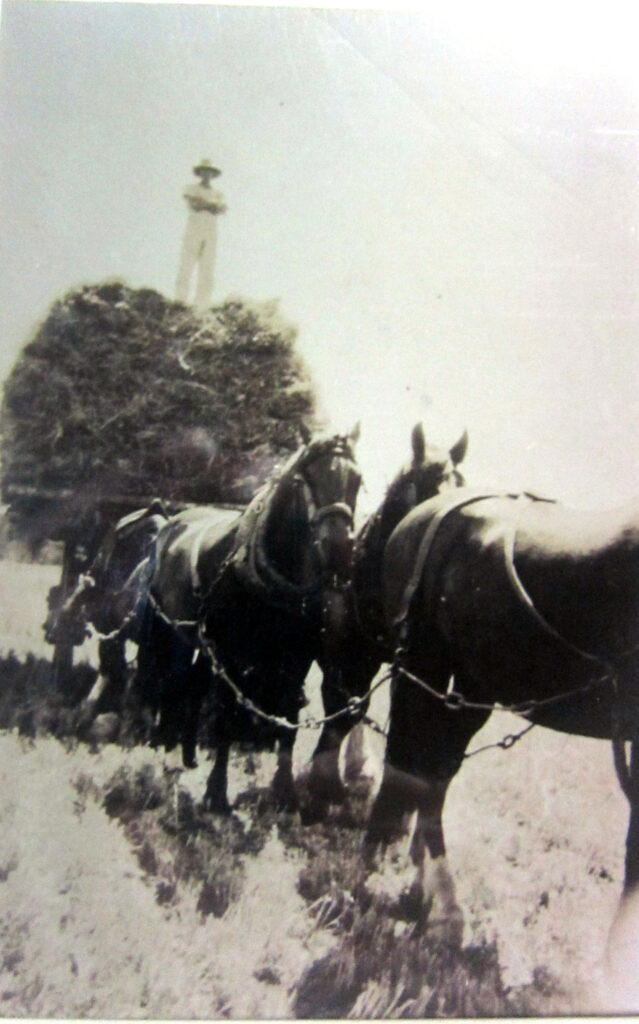
Working On the Land
All information sourced from Doug Curran’s (1997) The Family History of Michael Curran 1836-1997.